Vero Live
- 4.6
- Rating
- 1.00M
- Installs
- Free
- Price

 Analysis by App-foxy
Live-streaming apps can be exciting, but they also ask for more attention and trust than an ordinary social feed. That is why I approached Vero Live less like a quick entertainment download and more like a place where I might spend time watching people, interacting with strangers, and deciding what personal information I was comfortable sharing. My overall impression is positive, but cautious: it is easy to understand as a live social hub, while the mature audience and possible in-app spending mean it deserves deliberate use rather than automatic trust.
The app comes from Funbytes Dev Team and is free to install on Android devices running version 7.0 or later. It has reached over a million installs and holds a 4.6 average from roughly 5,700 ratings, which suggests that many users find the basic experience worthwhile. Those numbers helped set my expectations, but they did not replace my own checks. A popular social app can still be a poor fit if its conversations, spending model, or privacy choices do not match the way you use your phone.
What using Vero Live feels like in practice
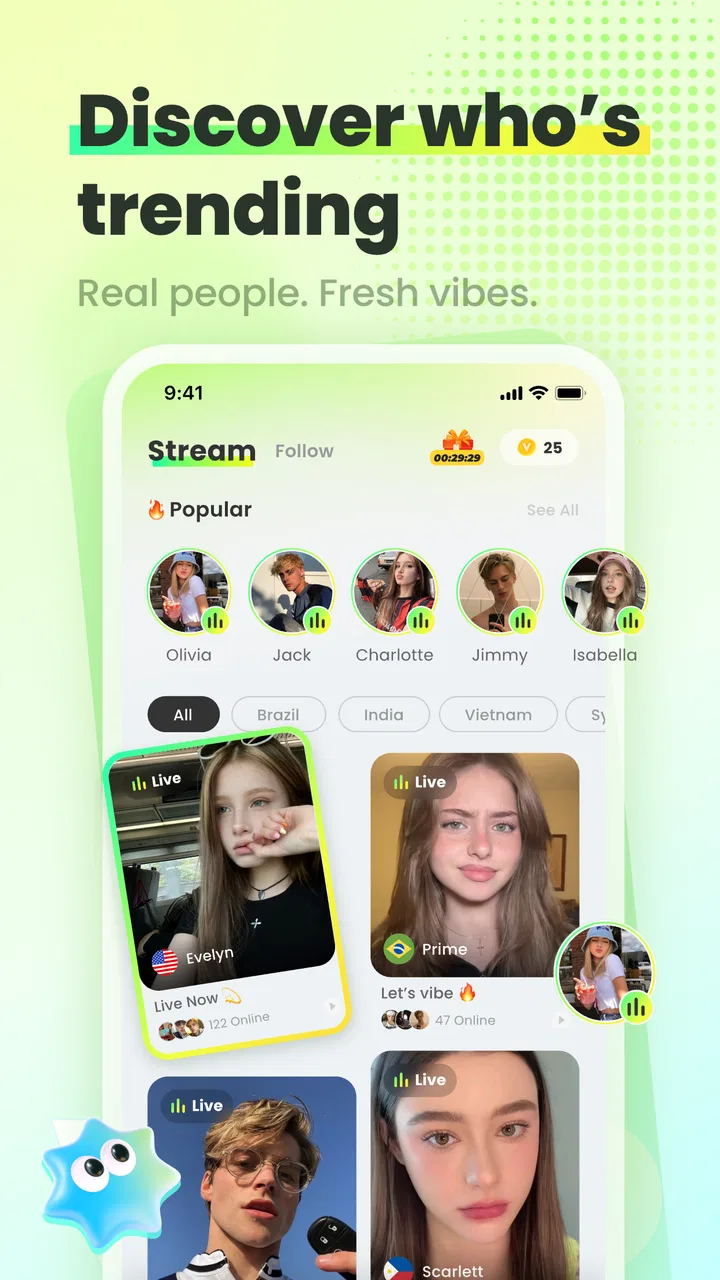
I see Vero Live as a place for people who prefer immediate, personality-led interaction over carefully edited posts. A live broadcast has a different rhythm from a normal video: you are not simply consuming a finished clip, and the attraction comes from being present while something is happening. That makes the app more engaging when you want company, conversation, or a sense of participation rather than a silent scroll.
You May Also Like

 Blood Strike: 2.5 Anniversary
Blood Strike’s Loadouts Turn Every Drop Into a Tactical Gamble
A close look at Blood Strike’s custom loadouts: how fast access to signature weapons reshapes its battle royale rhythm, rewards preparation, and narrows the gap between fights.

 Pandora - Music & Podcasts
Pandora’s Music Is Easy to Start, but Harder to Recover
Pandora’s strength is its low-effort path from a seed to a station. Its weak spot is how much confidence it asks you to place in connection, setup, and quiet recovery.

 8 Ball Pool
 Is Built on Rivalries, Rematches, and Routine
A close look at the rivalries, rematches, shared routines, and unanswered safety questions that turn a quick pool match into a persistent mobile community.

 Samsung Music
’s Quiet Strength Is Playing What You Already Own
Its reach comes less from spectacle than from dependable access to a personal library. That simplicity is both the app’s strongest retention engine and its ceiling.

 AccuWeather: Weather Radar
AccuWeather Review: A Quick, Clear Forecast for Everyday Decisions
For everyday plans, the best forecast is the one you can understand quickly. AccuWeather makes rain timing, radar, and local conditions easy to act on, with a few trade-offs.

 Hill Climb Racing
Why Hill Climb Racing Still Turns Crashes Into One More Run
A tiny car, a bumpy hill and one more upgrade: Hill Climb Racing keeps resurfacing because its simple chaos makes every near-miss feel personal.
More From Our News Desk
View All News


The social category matters here. This is not just a video player with occasional live content; the appeal depends on the relationship between viewers and broadcasters. If you enjoy discovering personalities, joining an active audience, or returning to a familiar stream, the format can feel more personal than a conventional feed. On the other hand, anyone looking for private messaging, polished short videos, or a tightly controlled professional broadcast tool may find the experience less suitable than a dedicated alternative.
My first practical recommendation is to spend a little time observing before interacting. Live rooms move quickly, and the tone of one broadcast may be completely different from another. Watching quietly lets you understand the community style, the pace of comments, and whether the content feels comfortable for you. It also prevents the common mistake of treating every live room as if it had the same standards or audience.
The app is marked Mature 17+, and that should influence how families approach it. The age label is not a minor footnote: live social spaces can expose viewers to adult conversation, unpredictable behavior, and pressure to participate. I would not hand this app to a younger teenager simply because the download itself is free. For an adult user, the rating is a reminder to use judgment rather than assuming that every room will be appropriate.
A realistic everyday use case
Imagine finishing work and wanting light company while cooking dinner. I could open a live room, listen to a broadcaster, and occasionally follow the conversation without committing to a full film or podcast. That is where the format makes sense: it fills a social gap while leaving me free to step away. The trade-off is that live content is less predictable. A room can become noisy, repetitive, or uncomfortable quickly, so I would keep the app available for short visits rather than letting it run unattended for hours.
Another useful scenario is discovering a creator through a live interaction instead of an edited profile. The immediacy can help me decide whether I genuinely enjoy someone’s style. I would still avoid treating a friendly broadcast as a personal relationship. The live format can make interactions feel closer than they really are, and keeping that boundary clear is one of the most important habits for using any social streaming service responsibly.
How it compares with familiar social alternatives
Compared with a standard social network, Vero Live puts more weight on the present moment. A normal feed gives me time to inspect a post, think about a reply, and move on. Live rooms create urgency: comments arrive together, the broadcaster may respond immediately, and the atmosphere can change without warning. That is the main reason to choose this app, but also its central weakness.
Compared with a conventional video platform, the experience is more interactive and less predictable. Edited video usually gives me better control over length, quality, and subject matter. Vero Live is more appealing when I want participation, but less efficient when I simply want reliable information or entertainment on my own schedule. For tutorials, news, or carefully produced reviews, I would usually choose a normal video service. For spontaneous social contact, this app has a clearer purpose.
Compared with private group-chat tools, live streaming is more open and less intimate. A private chat is better when I already know the people involved or need a controlled conversation. Vero Live makes more sense when discovery is the goal. That openness also means I would be more careful about identifying details, direct contact requests, and any invitation to move a conversation somewhere else.
Trust begins with what I can actually check
When I review a social app, I separate visible controls from assumptions. I do not treat a polished interface or a strong rating as proof that every privacy concern is solved. In Vero Live, my trust would depend on the choices presented during account setup, the controls available around interaction, and whether the app makes it clear what I am doing before I do it.
I would pay attention to whether I can decide how much profile information to expose, whether interaction can be limited, and whether unwanted behavior can be reported or blocked from the point where it appears. These are not decorative options. In a live environment, a useful control needs to be easy to reach while a conversation is happening, not hidden behind several unrelated screens.
I would also review the device permissions shown during installation and first use. A permission request should make sense for the action I am trying to perform. If I am only watching, I would be uncomfortable granting access that seems unrelated to viewing. If I later choose to create or broadcast content, I would reconsider each request at that moment instead of approving everything in advance. This staged approach gives me more control and makes it easier to understand why access is being requested.
The current version is 2.0.0, so I would keep an eye on how controls behave after updates. A version change can alter menus, defaults, or the visibility of settings even when the main purpose of the app remains the same. My habit with a social app is simple: after an update, I revisit the account, notification, privacy, and purchase areas before returning to regular use.
Moments when data sensitivity matters most
Live streaming creates several moments where I would slow down. The first is account creation. I would use only the information needed to make the account practical, avoid placing a phone number, workplace, school, or exact location in a public profile, and think carefully before using a recognizable username across multiple services. A live audience does not need a complete biography to interact with me.
The second moment is conversation. A viewer may ask where I live, whether I am alone, what time I work, or how to contact me elsewhere. Even if the question sounds casual, the answer can create a pattern about my routine. I would keep responses general and would never share passwords, verification codes, financial details, private photographs, or identity documents through a live conversation.
The third moment is broadcasting. If I chose to go live, I would inspect the background before starting. A street visible through a window, a delivery label, a school uniform, or a reflection in a screen can reveal more than intended. I would also decide in advance whether I wanted my voice, face, room, and daily schedule to remain part of a public social identity. The easiest privacy problem to fix is the one prevented before the broadcast begins.
Notifications deserve attention too. A live app can become intrusive if every interaction demands an immediate response. I would begin with a restrained notification setup, then add alerts only for people or activity I genuinely care about. This is more than a comfort setting: fewer interruptions reduce the pressure to open the app impulsively, which makes it easier to keep viewing and spending within boundaries I chose earlier.
Keeping control over spending
The download is free, but Vero Live includes optional purchases ranging from $0.99 to $99.99 per item. That is a wide enough range for me to treat every virtual purchase as real spending, not as a harmless extension of the chat. I would never enter a payment method casually, and I would avoid buying anything while feeling pressured by a countdown, a public request, or the desire to gain attention from a broadcaster.
My preferred workflow would be to set a personal limit outside the excitement of a live room. I would decide whether I was willing to spend at all, choose a small ceiling if the answer was yes, and keep purchase authentication enabled on the device. I would also check the confirmation screen carefully before approving anything. A free app can still become expensive when small, repeated actions are made during emotionally engaging streams.
This is one area where Vero Live may not suit users who want completely passive social entertainment. If you dislike virtual goods, creator-focused spending, or the possibility of feeling encouraged to contribute, a conventional video app with no live purchase pressure may be a better match. The issue is not that optional purchases exist; it is that live interaction can make an optional action feel socially urgent.
Practical boundaries for viewers and broadcasters
I would use the app with a few rules that are easy to follow. I would keep my profile minimal, avoid revealing predictable routines, and leave a room immediately if the conversation becomes aggressive or invasive. I would not argue with a disruptive person to prove a point. Blocking, reporting, or simply exiting is usually more effective than giving unwanted attention.
For broadcasters, preparation matters even more. I would use a neutral background, remove visible documents, and keep personal notifications away from the recording area. I would also establish a stopping time before going live. Without that boundary, social interaction can continue long after it stops being enjoyable, especially when viewers expect constant availability.
A less obvious tip is to distinguish between a room that is entertaining and one that is trustworthy. A charismatic host may still encourage oversharing, move viewers toward private contact, or create pressure to spend. I would judge behavior over time rather than treating warmth as evidence of good intentions. The same applies to other viewers: familiarity in a chat is not the same as knowing someone offline.
Another useful habit is to test the app in a low-stakes way. I would first browse without adding personal details, then inspect the visible account and interaction choices, and only later decide whether following, commenting, or broadcasting felt worthwhile. This sequence gives me a clearer sense of the service without committing my identity, time, or money too early.
Who will appreciate it, and who should skip it
Vero Live is a good fit for adults who enjoy spontaneous social viewing and are comfortable making their own boundaries in public conversations. It can work well for someone who wants a lively alternative to edited feeds, likes discovering personalities, and does not mind that the quality and tone of a room can vary. The free entry point also makes it easy to explore before deciding whether the format has a place in a daily routine.
I would be more hesitant to recommend it to people who want predictable content, strong separation between public and private life, or a completely distraction-free experience. It is also not my first choice for younger users, people who find live social pressure difficult to resist, or anyone who prefers not to manage optional purchases. Those users may be better served by a curated video platform, a private community, or a messaging app used with known contacts.
The app’s rating and reach show that it has found an audience, but they do not tell me whether that audience shares my expectations. A high average can reflect enjoyable entertainment while saying little about how comfortable I will be with a particular room or interaction. I treat the rating as a reason to investigate, not as a guarantee.
My cautious verdict
I enjoyed the basic idea behind Vero Live because live interaction can feel more human than endlessly scrolling finished posts. The app is most convincing when I use it intentionally: I choose a room, observe its tone, protect my personal details, and leave when the experience no longer feels worthwhile. Its social immediacy is a genuine strength, but it also demands more judgment than a passive media app.
My final recommendation is therefore conditional. Adults who want a live social space should give it a careful try, especially if they value spontaneous conversation over polished content. I would keep the profile restrained, review permissions and account choices myself, control notifications, and treat every purchase as a deliberate financial decision. The best way to use Vero Live is with curiosity, clear boundaries, and no assumption that popularity automatically equals trust.
Funbytes Dev Team has created an accessible entry point into live social viewing, and the free download lowers the barrier to testing it. Still, the Mature 17+ setting, public interaction, and optional spending make personal judgment essential. If those conditions suit you, the app can become an enjoyable way to share a moment with a live audience. If they do not, choosing a quieter and more controlled alternative is not missing out; it is choosing the environment that fits you better.
FAQs for Vero Live
01What is Vero Live, and what can I do with it?
Vero Live is a social live-streaming app designed for watching and participating in real-time broadcasts. Depending on the available features in your region, you may be able to follow creators, join live rooms, interact through comments or reactions, and discover ongoing streams. The experience is focused on immediate, community-based communication rather than traditional edited video content, so the quality and topics can vary between broadcasts.
02Is Vero Live free to download and use?
Vero Live can generally be downloaded without an upfront charge, but some features may involve optional in-app purchases. Live platforms commonly offer virtual gifts, premium interactions, subscriptions, or other paid items that support creators. Before confirming a transaction, check the displayed price and your app-store payment settings. Parents should also review purchase controls, since repeated small transactions can add up quickly.
03Do I need to create an account to watch live streams?
Account requirements may differ depending on the version of Vero Live and the action you want to perform. Basic browsing may be available without completing a full profile, while commenting, following broadcasters, sending messages, or using interactive tools will usually require registration. Creating an account also means providing personal information, so review the sign-up permissions and privacy settings before continuing.
04Is Vero Live safe for children and teenagers?
Vero Live should not automatically be considered a child-safe environment. Live broadcasts are unpredictable, and users may encounter mature language, adult themes, aggressive behavior, or interactions with strangers. If a young person uses the app, adults should check the platform’s age rating, enable device-level parental controls, discuss privacy and reporting practices, and avoid allowing the sharing of personal details such as a home address or school.
05What privacy and moderation features should I check before using Vero Live?
Before using Vero Live regularly, review which profile details are public, whether your account can receive messages from strangers, and how the app handles location, camera, microphone, and notification permissions. Learn how to block or report accounts and look for tools that limit unwanted interactions. Live services depend heavily on moderation, so report inappropriate content promptly and avoid sharing sensitive information during broadcasts.
Pros
- Live video and chat make interactions feel immediate and personal.
- Useful for sharing moments with followers in real time.
- Simple interface makes starting or joining broadcasts easy.
- Community interaction can help creators build closer audiences.
- Supports spontaneous content rather than heavily edited posts.
Cons
- Quality depends heavily on your internet connection and device camera.
- Live broadcasts may consume significant mobile data and battery.
- Smaller audience than established social livestreaming platforms.
- Public streams can expose users to unwanted comments or behavior.
- Some features may require account access or in-app permissions.

Vero Live
Gallery